
 (Near East University), China
  (Yangzhou University, Wuxi University of Technology), Cambodia
  (National University of Cheasim Kamchaymear, National University of Battambang, Svay Rieng University, University of Management and Economics), Nigeria
  (Federal College of Education (Technical) Gusau), Pakistan
  (Gift University of Gujranwala, Lahore Leads University, University of the Punjab), and Philippines
  (University of Caloocan City, Arellano University).
| Journal Title | Journal of Technology-Assisted Learning |
| Initials | JTAL |
| Abbreviation | J Technol Assist Learn |
| Editor-in-chief | Asst. Prof. Dr. Panji Hidayat |
| Frequency | Biannual (March & September) |
| ISSN | 3089-7408 (online) | 3089-7394 (print) |
| DOI Prefix | 10.70232/jtal |
| Citedness | SCOPUS | Google Scholar | Garuda | Dimensions |
| Publisher | Scientia Publica Media in collaboration with Ahmad Dahlan University |
| Language | English |
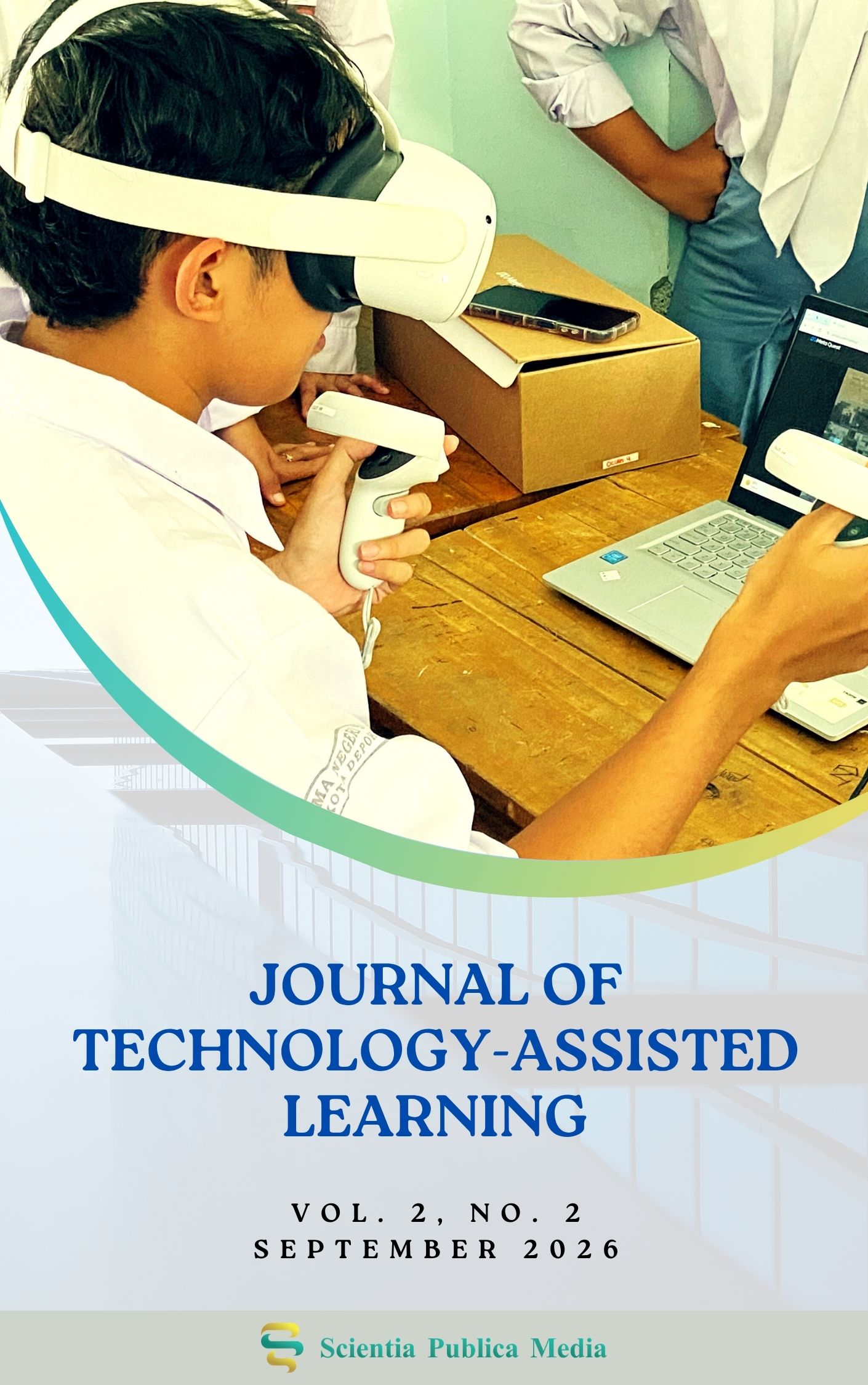
The Journal of Technology-Assisted Learning (JTAL) is an open-access, peer-reviewed journal dedicated to advancing research in digital learning. It focuses on the promotion and dissemination of studies related to electronic learning and distance education on a global scale. The journal encourages multidisciplinary research in areas such as online learning and teaching, technology-driven design and implementation of academic programs, teaching initiatives and projects, emerging technologies and their applications, blended learning approaches integrating online and face-to-face instruction, instructional materials, and pedagogy. JTAL explores theories, concepts, perspectives, pedagogical frameworks, implications, and recommendations for technology-enhanced education. Its primary objectives are to foster comprehensive, multidisciplinary discussions on technology-assisted learning research; to facilitate international collaboration and knowledge exchange in the field; and to explore strategies for leveraging technology-enhanced learning to support sustainable development. JTAL serves as a vital platform for disseminating research and scholarship from individual, institutional, national, and international perspectives. The journal promotes interdisciplinary collaboration and welcomes diverse contributions, including empirical research, systematic reviews, theoretical and conceptual studies, and practical applications and case studies. For further information, see the Author Guidelines.
The journal upholds a strict Zero Tolerance for Plagiarism policy, which prohibits the use of another person’s words, ideas, or arguments without proper citation. Authors are strongly advised to utilize plagiarism detection tools such as iThenticate or Turnitin prior to submission. JTAL also encourages the submission of original works that adhere to the publishing standards established by the Committee on Publication Ethics (COPE). The journal offers immediate open access to its content, based on the principle that making research freely accessible to the public promotes a broader global exchange of knowledge.

